Velosyss SafeTrack
Hardwired GPS Tracker for Cars & Bikes with Remote Engine Cut-off
₹2,999
₹7,499
In Stock
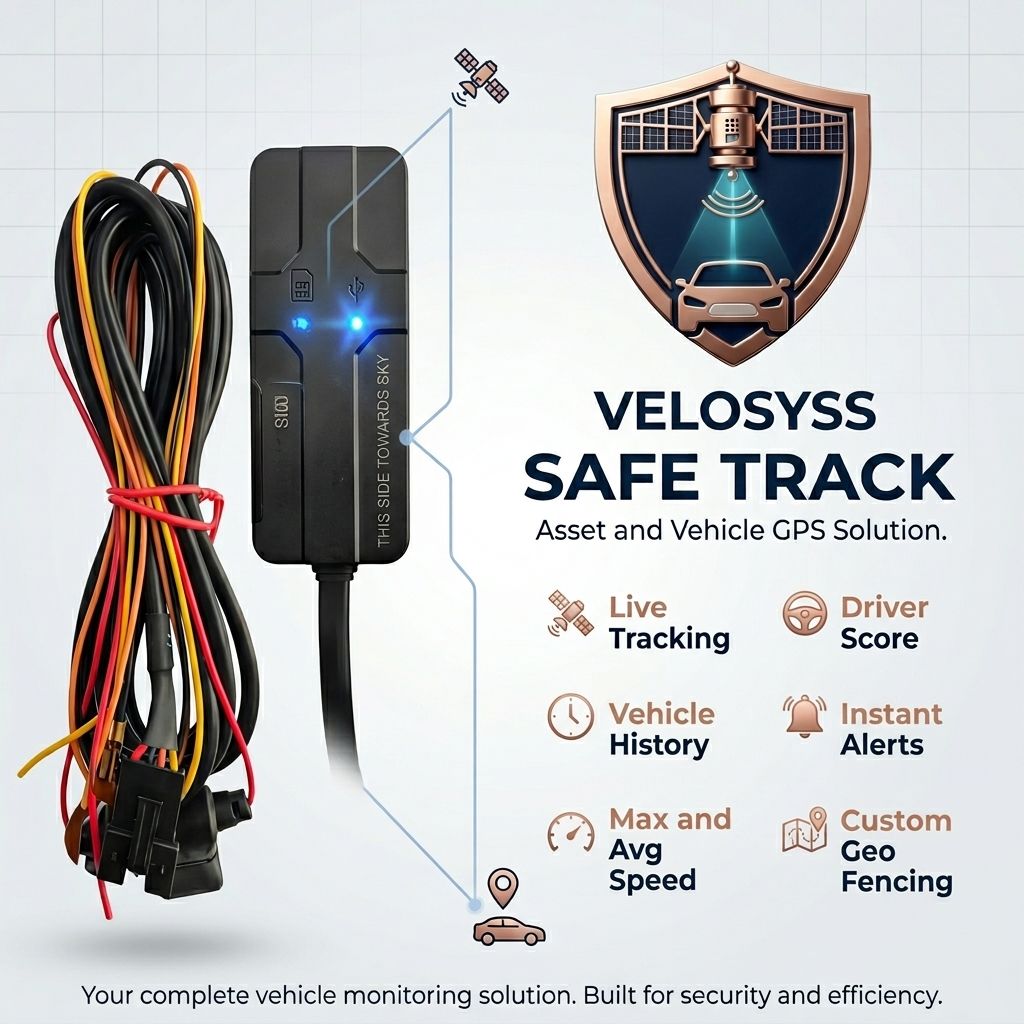
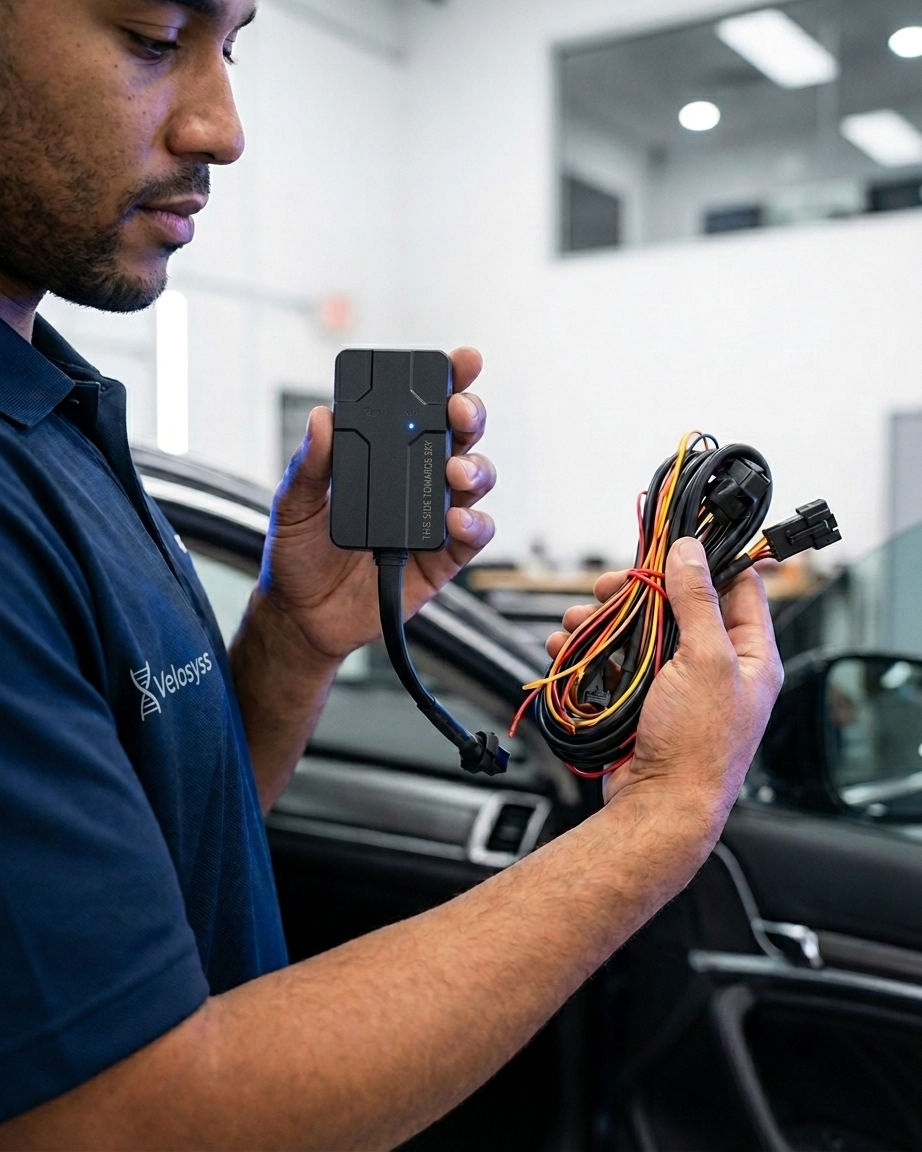
The Velosyss SafeTrack is a compact, hardwired GPS tracker for cars, bikes and fleets. It connects directly to your vehicle's battery, supports 9–90 V systems, and is IP65 rated against dust and water. For anti-theft protection, it detects ignition on/off, alerts you to vibration, and supports remote engine cut-off through a relay. Track your vehicle in real time, set geofence alerts, and review route history, all from one app.
Cash on delivery available.You'll be asked to create a free account to complete your order.Technical Specifications
| Dimensions | 71.9 × 30.2 × 12.9 mm |
| Weight | 29 g |
| Network | 2G GSM |
| Water & Dust Resistance | IP65 |
| Backup Battery | 50 mAh, 3.7 V |
Installation Guide
Wiring Color Codes
Red | V+ Constant Power (9V–90V DC) |
Black | Negative / Ground |
Orange | ACC / Ignition detection |
Yellow | Relay control line for remote engine cut-off |
Secure the Red wire (V+) to a 9V–90V DC constant power source, ideally via the vehicle fuse box using an inline fuse. Connect the Black wire to a clean chassis ground point to complete the circuit.
If you want to use the remote fuel/power cut-off feature, install the provided relay. Cut the positive wire of the vehicle fuel pump. Connect the cut ends in series to the relay Normally Closed (N.C.) thick green line (87a) and COM thick green line (30). Connect the Yellow wire to the relay control line terminal (86).
Connect the Orange wire to a 12V line that is only live when the ignition is ON — typically the ACC wire behind the steering column or at the fuse box. This enables the tracker to detect engine start/stop events and report ignition status.
Secure the tracker firmly to a solid structural component of the car — for example, a metal brace behind the glovebox or under the dashboard. The device relies on an internal accelerometer for vibration and towing alerts. If left loose those alerts will not work correctly. Ensure the device is oriented so the internal antenna faces upward toward the sky.
Frequently Asked Questions
Everything you need to know before buying a GPS tracker.
No. Every Velosyss GPS tracker comes with its own SIM card already installed and connects directly to India's 4G network. Your vehicle's Wi-Fi or a mobile hotspot is not required.
Yes. The Velosyss mobile app and web dashboard both show a live map with the exact position, speed, and heading. Location refreshes every 5 to 60 seconds depending on your plan.
Our plans are Silver at ₹199/month, Gold at ₹299/month, Gold at ₹2,999/year, Platinum at ₹4,999/year. See the Plans page to compare features.
Yes. SafeTrack works on any vehicle with a 9 V to 90 V electrical system, including cars, motorcycles, trucks, and auto-rickshaws. It is compact enough to be hidden behind the dashboard.
Installation takes 20 to 30 minutes using colour-coded wires. You can follow the step-by-step guide on this page, or ask any auto-electrician or car accessories shop to install it.
Yes. SafeTrack is IP65 water and dust resistant, so it can handle dust, rain, and road splash. For the best protection and signal, install it inside the vehicle, away from direct water and high heat.
Yes, on every plan. The tracker must be installed with a relay. Once the relay is fitted, you can cut the engine from the Velosyss app to prevent the vehicle from restarting, and restore it from the app.
Yes. Draw up to 20 virtual boundaries on the map, depending on your plan, and get instant alerts when the vehicle enters or exits any zone. Overspeed alerts are sent the moment the driver exceeds your configured speed limit.
When GPS signal is temporarily lost in tunnels, underground parking, or dense buildings, the app shows the last confirmed location with a clear timestamp. Once signal is restored, live tracking resumes automatically.
Yes. The tracker works on India's nationwide 4G network, across major metros, Tier-2 and Tier-3 cities, state highways, and national highways.